Johannesburg Matters: What Role for Civil Society Organisations?
- In September 2026, CDE hosted a discussion on what civil society organisations could do to help a new mayor fix Johannesburg after the 4 November elections.
- Yunus Chamda of Joburg Crisis Alliance, Julia Fish of JoburgCAN and Ferrial Adam of WaterCAN kicked off the discussion.
- Civil society organisations are ready to play a larger, more meaningful role in making the city work. Many have an intimate knowledge of what is happening in communities and can identify service delivery failures long before the city does. They have also developed practical solutions to many municipal challenges.
- Civil society leaders do not believe that their organisations can become a substitute for government. They have a different role and must remain strong, independent, and organised. Participants discussed using council meetings, public pressure and organised activism to hold political leaders accountable.
- Civil society is not a monolith, with different organisations holding many differing views.
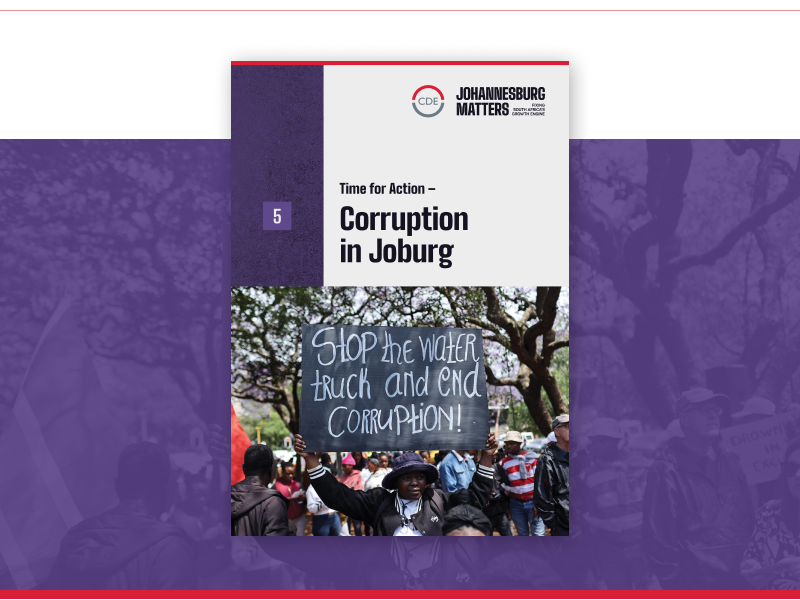
- Corruption and political interference in the running of the city are widespread practices that need to be dealt with decisively. All agreed that this would not be simple, but some participants believed they could be remedied by strong leadership and finding common ground.
- The response of civil society organisations to a new government will be determined by what kind of administration comes into power in November. Two broad scenarios were identified: a predatory administration pursuing more of the same or a reforming one dedicated to rebuilding the city. A number of organisations indicated that they were working on plans on how to react to different scenarios.